
Digital ID Card
When entering a foreign country, one has to present an identity card that describes the person who carries it with some information like name, citizenship and address. The situation is almost the same when accessing certain protected services in the Internet.
A user usually has a digital identity at his home organization (e.g. his university). This identity consists of information like name, email address or his study branch. Upon successful authentication, the user can decide if he wants to present his Digital Identity Card to the service he wants to access. However, not presenting it means that the requested service can't be accessed.
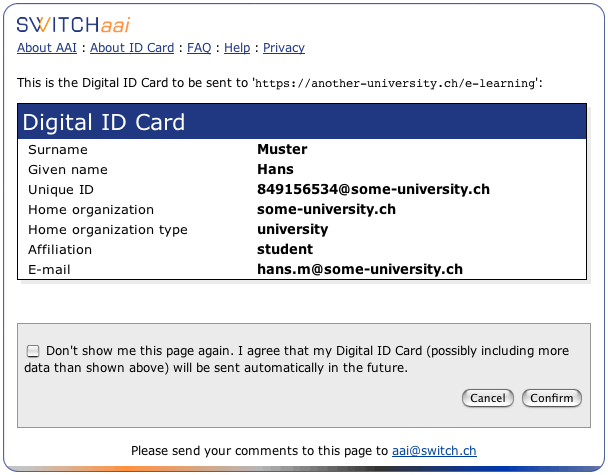
In contrast to an identity card in real life, the Digital Identity Card only contains as much information about a user as is required by the service the user wants to access. As described in the AAI Privacy Policy, the user's identity information is encrypted before transmission.